






District-Wide Financial Visibility in K-12 for 2026

Key takeaways:
- Manual reporting creates blind spots that district ERPs and SIS platforms were never designed to fill.
- Most K-12 fraud occurs at the school level, where oversight is weakest and cash handling is most common.
- KEV Group helps districts unify school-level accounting, payments, and reporting in one audit-ready platform.
- Real-time visibility into school funds reduces audit findings, protects staff, and builds community trust.
- Standardized financial controls across every campus prevent small errors from becoming costly headline stories.
Every day, K-12 finance directors face the same frustrating reality: they can pull detailed reports from their district ERP, but they have no way of knowing what’s actually happening at individual schools. District-wide financial visibility remains elusive because the tools designed for central office reporting were never built to track school-level transactions in real time.
This guide breaks down why manual reporting creates control gaps, how those gaps expose districts to audit findings and fraud, and what you can do to close them. You’ll learn how unified school-level finance management improves oversight without requiring a costly system overhaul.
If you manage finances for a K-12 district and want to see every dollar at every school without chasing spreadsheets, this guide is for you.
What is district-wide financial visibility?
District-wide financial visibility means having real-time access to every financial transaction across every school in your district. It includes student activity funds, campus activity accounts, fee collections, fundraiser proceeds, and all the money that moves through individual buildings every day.
Most districts have strong controls at the central office level. ERPs track budgets, payroll, and vendor payments with precision. The problem is that school-generated funds often exist outside those systems entirely.
When you lack visibility into school-level finances, you’re managing part of your district’s money with one hand tied behind your back. You won’t know about issues until an audit uncovers them or a local news story breaks.
Why do manual reporting processes create financial blind spots?
Manual reporting relies on spreadsheets, paper receipts, and monthly reconciliations performed by staff who juggle multiple responsibilities. That approach introduces delays, errors, and gaps that compound over time. In fact, our research shows that at the school level, spreadsheets outrank district-approved systems as a recording method.
Consider what happens when a school bookkeeper collects cash for a fundraiser. They record it in a spreadsheet, issue a paper receipt, and eventually deposit the funds at a bank. The full record and report might not reach the district until weeks (or months) after the cash was initially collected.
By the time that report reaches a finance director, the data is already old. If something went wrong, the opportunity to catch it quickly has passed. This delay is where the blind spot lives.
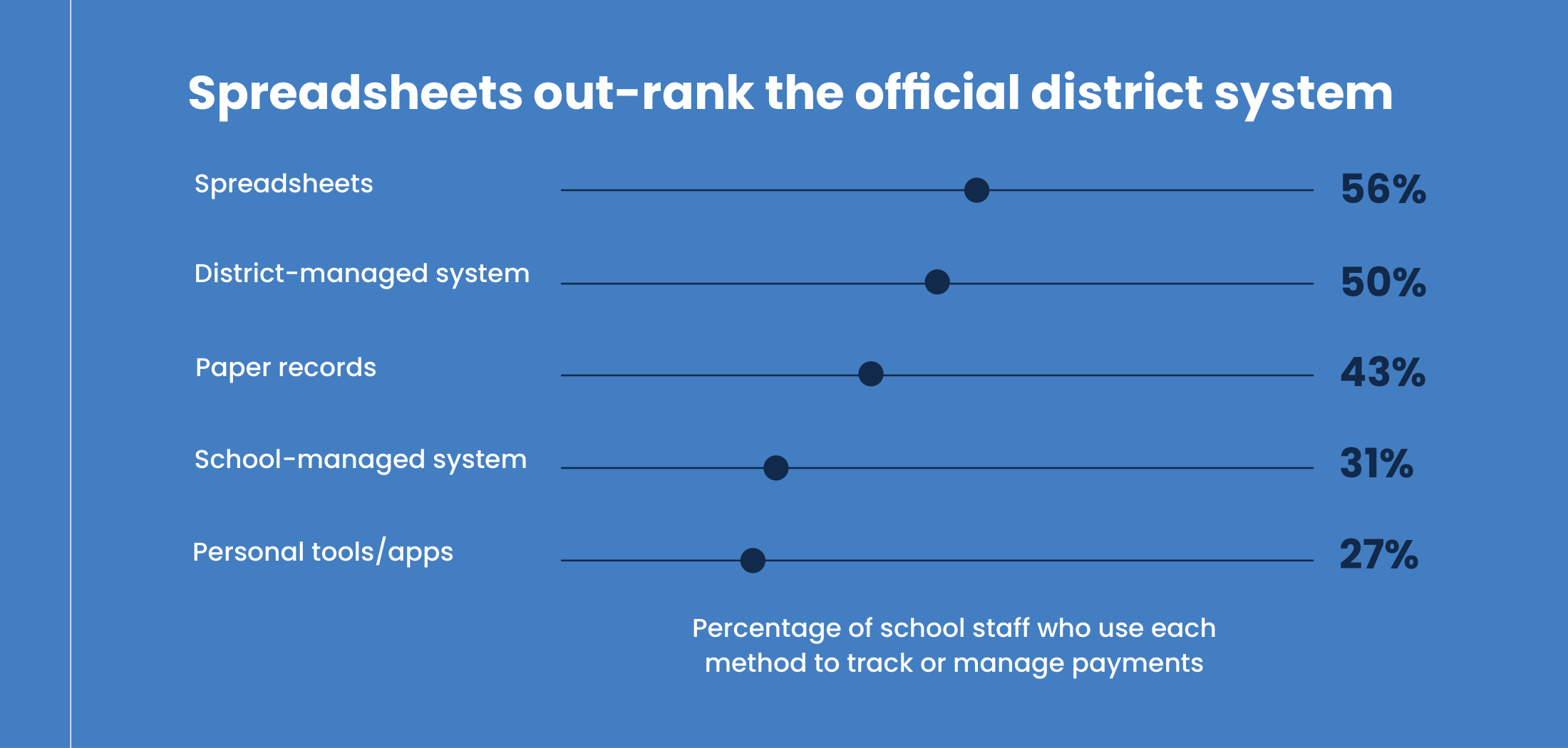
New research shows that spreadsheets are the most common method schools use to track payments, even above the approved district system.
The problem with spreadsheet-based reconciliation
Spreadsheets work fine for simple calculations, but they fail as a control mechanism. There’s no audit trail showing who changed what. There’s no automatic check to prevent someone from entering the wrong amount. And there’s no way to flag a discrepancy in real time.
According to research from KEV Group, 62% of school-level fraud cases involve cash. When cash collection processes depend on manual documentation, the risk of loss or theft increases with every day the money sits on campus.
Why delayed deposits create risk
Timely deposits are one of the simplest controls a district can enforce, and one of the most frequently broken. When funds sit in a desk drawer over a weekend or get commingled with other collections, the audit trail degrades. Details get forgotten. Matching deposits to specific events starts to rely on memory instead of documentation.
How do school-level gaps affect district-wide oversight?
The school finance blind spot isn’t just a bookkeeping inconvenience. It’s a structural vulnerability that affects audit outcomes, community trust, and your ability to protect staff from accusations when something goes wrong.
Analysis of 93 verified K-12 fraud cases between 2024 and 2025 revealed that 68% of fraud incidents occur at the school level. That’s twice the rate of district-office fraud. The pattern is consistent: schools manage large volumes of money using processes that weren’t designed for K-12 finance operations.
Who commits K-12 fraud?
Internal staff and volunteers are responsible for 97% of documented school fraud cases. These aren’t career criminals. They’re bookkeepers, coaches, secretaries, and PTA members operating in environments where weak or missing controls create temptation.
This reality underscores why financial visibility matters. When you can see every transaction in real time, you protect staff from false accusations and catch genuine problems before they grow.

Almost all school staff and volunteers are hardworking and trustworthy. But it only takes one bad apple to cause serious damage.
The hidden cost of digital payment misuse
Personal payment apps like Venmo, Cash App, and PayPal create a growing risk category. When teachers or staff collect payments through personal accounts, those transactions exist entirely outside your financial controls.
While only 10% of K-12 fraud cases in recent analysis involved peer-to-peer payment apps, those incidents accounted for 77% of all documented losses. The lack of visibility makes digital payment misuse especially expensive when it occurs.
Unauthorized payment apps proliferate when the official process is harder than the workaround.
What are the limits of ERP and SIS platforms for school-level finance?
Enterprise resource planning systems and student information systems are essential for district operations. They track budgets, manage payroll, store student data, and generate compliance reports. But they were built for district-level processes, not school-level fund management.
Most ERPs require manual data entry to capture school-generated funds. That means someone at each school exports data, reformats it, and submits it to the district office for consolidation. The process creates exactly the gaps and delays that make real-time visibility impossible.
Why ERPs don’t close the blind spot
An ERP is a system of record. It’s designed to store and report what’s already been entered. It isn’t designed to automatically capture transactions happening at dozens of school buildings simultaneously.
Improving financial visibility doesn’t require replacing your ERP. It requires layering a school finance platform on top of it, one that connects school-level transactions to your general ledger automatically.
What does unified school-level finance management look like?
A unified approach to school finance brings accounting, payments, and reporting into a single platform that covers every campus in your district. Instead of reconciling spreadsheets from 30 different schools, you see real-time data in one dashboard.
This architecture eliminates the fragmentation that creates audit risk. When a parent pays a fee online, that transaction posts to the correct account code automatically. When a sponsor collects cash for a field trip, the deposit flows into your general ledger without manual re-entry.
How SchoolCash delivers district-wide visibility
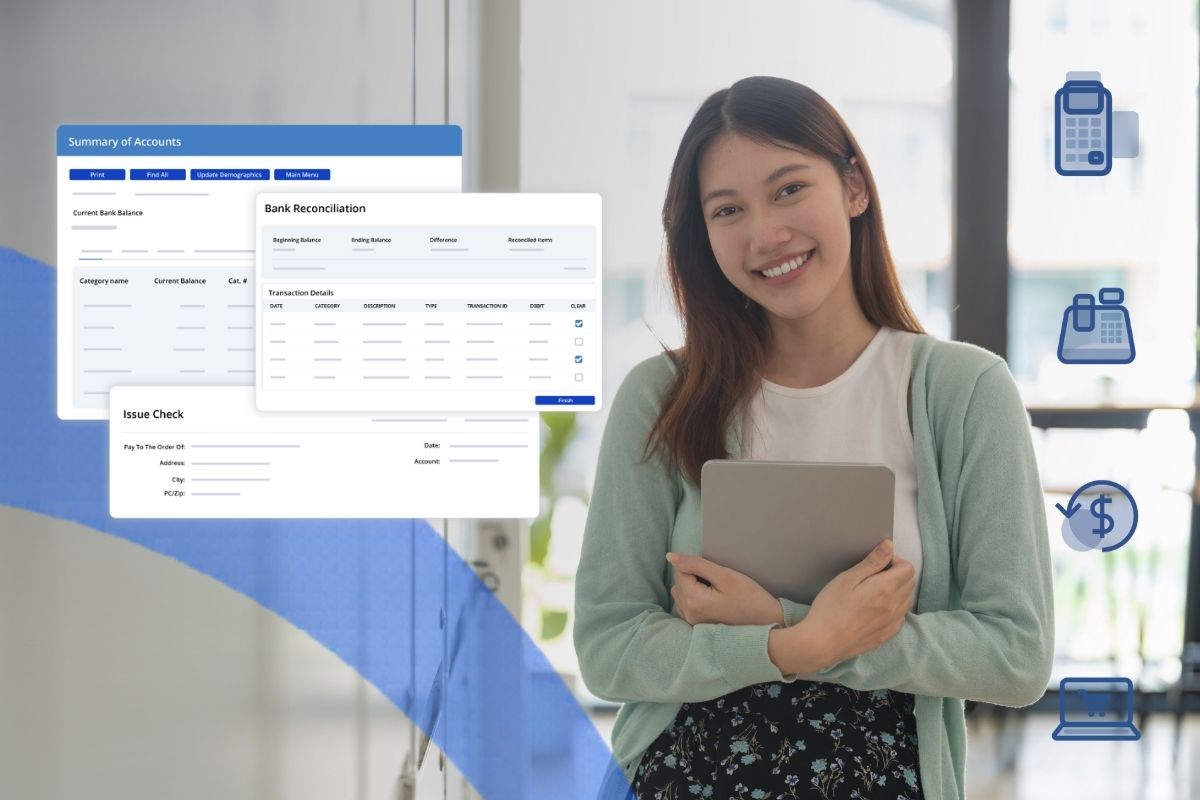
KEV Group’s SchoolCash school finance platform unifies payments, accounting, and reporting for student and campus activity funds across every school in a district. The platform automatically tracks, receipts, and posts payments, reducing manual work and financial risks.
For district finance teams, this means complete visibility into every school-level transaction. For bookkeepers, it means embedded controls that prevent errors before they happen. For auditors, it means clean documentation that’s ready on day one of the audit.
What internal controls strengthen school-level oversight?
Internal controls are the policies, procedures, and system configurations that prevent errors and fraud. At the district level, these controls are typically well-established. At the school level, they’re often informal or inconsistent.
Six control gaps show up repeatedly in activity fund audits: weak segregation of duties, missing documentation, delayed deposits, unapproved disbursements, poor fund tracking, and insufficient oversight. Addressing these gaps requires both clear policies and systems that enforce them.
Why segregation of duties matters
Segregation of duties means dividing financial responsibilities so that no single person can collect, record, approve, and reconcile a transaction. When one person handles all four functions, you have no meaningful control in place.
The fix isn’t always adding staff. It’s configuring your finance system to enforce role-based permissions so that approvals can’t happen without a second authorized user.
How to build documentation into the workflow
Documentation is where auditors form their opinion about intent. Missing receipts, verbal approvals, and undocumented purchases all signal control failures.
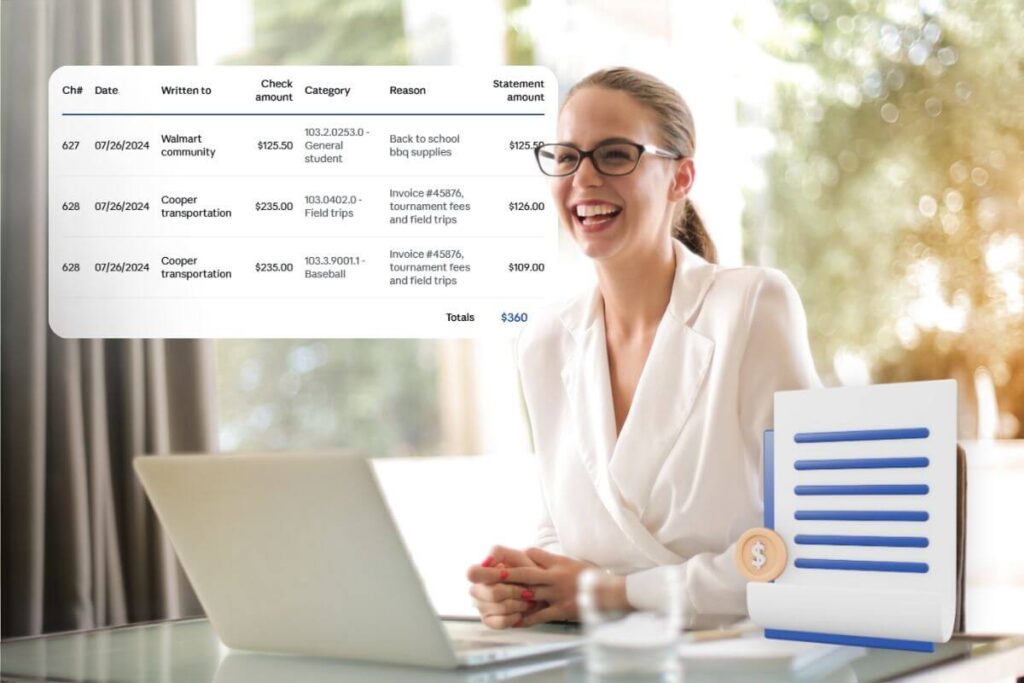
The solution is embedding documentation requirements into your finance system. When approvals can only move through the platform, the paper trail creates itself. No one has to remember to file a receipt because the receipt is already attached to the transaction record.
How does automation reduce audit risk?
Automation removes the human steps where errors accumulate. Instead of a process saying that a signature is required, an automated system enforces it. Instead of asking a bookkeeper to manually enter every transaction, an automated system captures data at the point of collection and posts it directly to your ledger.
This approach transforms reconciliation from a monthly scramble into a verification step. The system guides bookkeepers through the entire reconciliation. Month-end close becomes a review of work that’s already done, not a data-entry marathon.
Real-time ledger syncing explained
Real-time ledger syncing means every payment, whether it’s a tuition fee, lunch account deposit, activity fee, or event ticket purchase, creates a corresponding record in your financial system immediately. There’s no batch export. No manual import. No reconciliation gap.
When auditors request transaction records, you can produce a complete, time-stamped, unmodified record in seconds. That capability changes audit season from a stressful investigation into an administrative formality.
What role does cash handling play in school finance risk?
Cash remains the highest-risk category in school-level finance. It passes through multiple hands, documentation is often informal, and every physical touchpoint increases the chance of loss or theft.
The structural solution is moving cash collection into digital payment channels wherever possible. When parents pay online, the transaction records itself, the deposit clears without manual handling, and you remove the riskiest element of school-level payment collection.
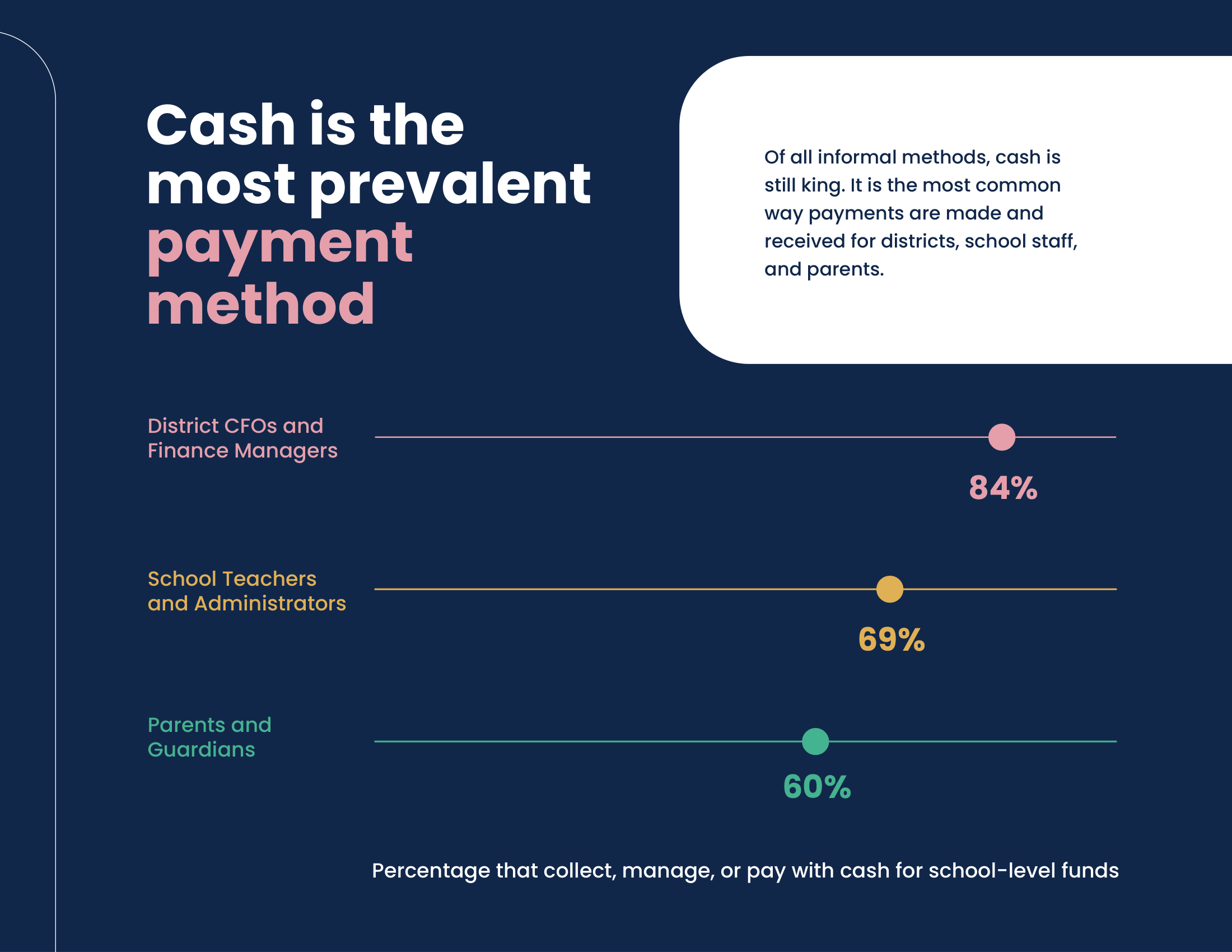
Cash is still the most common payment method.
When cash is unavoidable
Some collections will always involve cash, such as concessions, certain fundraisers, and emergencies. For these situations, clear policies and consistent enforcement matter most.
Every cash collection should generate a numbered receipt at the point of collection. Deposits should happen within 24 hours. And the person who counts the cash should not be the same person who records or deposits it.
How can districts prevent unauthorized payment channels?
Unauthorized payment apps proliferate when the official process is harder than the workaround. If your district-approved payment portal is clunky or confusing, staff will route collections through personal accounts (like Venmo or Cash App) because it’s faster.
The fix is making the authorized channel easier than the alternative. A well-designed online payments portal that parents and staff both find intuitive eliminates the incentive to go outside the system.
What should you look for in a School Finance Platform?
Choosing the right platform starts with understanding your specific gaps. If your biggest pain is reconciliation, look for real-time ledger syncing. If it’s cash handling, prioritize digital payment adoption. If it’s audit documentation, focus on built-in audit trails.
Regardless of your starting point, these capabilities matter for any K-12 finance platform:
- Integration with your existing ERP and SIS
- Real-time transaction visibility across all schools
- Role-based access controls that enforce segregation of duties
- Automated posting of payments to correct GL accounts
- Pre-built reports and audit tools for transparency
- Mobile-friendly parent payment portal
Why K-12-specific design matters
Generic accounting software doesn’t understand activity funds, booster accounts, or the compliance requirements specific to public education. A platform built for K-12 finance operations handles fund accounting, fee schedules tied to enrollment, and the segregation between student and campus activity accounts automatically.
How do you build a business case for better visibility?
Finance directors and CFOs often know they need better visibility but find it challenging to justify the investment. The business case starts with quantifying the cost of the status quo.
Add up the hours your team spends on manual reconciliation each month. Calculate the cost of audit findings, including remediation time and potential penalties. Consider the reputational risk if a fraud incident makes local news. These costs make the value of a unified platform tangible.
According to the Government Finance Officers Association, effective school budgeting requires ongoing monitoring and transparent reporting as key components of sound financial management.
Questions to ask during vendor evaluation
Before committing to a platform, ask vendors how they handle your specific pain points:
- How does the platform integrate with our current ERP?
- What does the implementation timeline look like?
- How quickly can our bookkeepers learn the system?
- What support is available when issues arise?
- Can we see references from districts similar to ours?
What resources help districts strengthen financial controls?
Building stronger financial oversight starts with understanding where your current gaps exist. KEV Group offers a financial maturity assessment that helps districts identify vulnerabilities and prioritize improvements.
For districts concerned about fraud risk specifically, a dedicated fraud risk assessment can pinpoint where your controls need attention. These tools give you a starting point for conversations with your board and a roadmap for implementation.
In conclusion: how to achieve district-wide financial visibility
District-wide financial visibility isn’t about adding another reporting tool. It’s about closing the structural gap between your central finance systems and the daily reality of how money moves through individual schools.
Manual processes create blind spots. Spreadsheets don’t enforce controls. ERPs weren’t designed for school-level fund management. The answer is a unified platform that connects every transaction at every school to your general ledger automatically.
When you can see every dollar in real time, you protect your district from fraud, reduce audit findings, and build the transparency that families expect. That’s the standard for K-12 finance in 2026.
FAQs
What is district-wide financial visibility?
District-wide financial visibility is the ability to see real-time financial data from every school in your district. It includes student activity funds, fee collections, fundraiser proceeds, and all school-generated revenue.
KEV Group’s unified platform gives finance directors complete visibility into school-level transactions without waiting for manual reports.
Why do manual reporting processes create blind spots?
Manual processes introduce delays between when transactions happen and when they appear in your records. Spreadsheets lack audit trails, can’t flag errors automatically, and depend on staff memory for accuracy.
These delays create the window where problems go undetected.
What percentage of K-12 fraud happens at the school level?
Analysis of verified fraud cases shows that 68% of incidents occur at individual schools rather than district offices. Schools handle high transaction volumes with limited oversight, making them more vulnerable than central administration.
KEV Group’s platform extends district-level controls to every campus automatically.
How does an ERP differ from a school finance platform?
An ERP manages district-level functions like payroll, budgeting, and vendor payments. A school finance platform tracks school-generated funds such as activity accounts, fee collections, and fundraiser proceeds in real time.
The two systems complement each other when integrated properly.
What internal controls matter most for school-level finance?
Segregation of duties, timely deposits, documented approvals, and real-time fund tracking are the controls that prevent most audit findings. These controls work when they’re embedded in your finance system rather than relying on staff memory.
Can a school finance platform integrate with existing district systems?
Yes. KEV Group’s platform integrates with existing ERP and SIS systems to unify school-level transactions with district-wide reporting. This integration eliminates manual data entry and keeps your general ledger accurate automatically.
Get the latest K-12 finance best practices delivered to your inbox.
Recommended For You