










Is Cash Management Costing Your Schools?

Key takeaways:
Cash management for schools rarely shows up as a budget line. Its real cost is spread across staff hours, risk, and delay.
Every dollar collected by hand gets counted, handed off, recorded, deposited, and reconciled, often by people whose main job is something else.
Each hand-off between collection and deposit is a point where records can go missing or errors can go unnoticed.
When school-level money takes days or weeks to reach a system, district leaders end up working from last month’s numbers.
The fewer hand-offs between collecting cash and recording it, the lower the cost in all three areas.
It’s 9:40 on a Friday night. The game is over, the bleachers are empty, and two volunteers are counting gate receipts on a folding table. They count it twice, band it, fill out a slip, and lock the cash box in the athletic office.
On Monday, someone walks it to the front office and one day later, the bookkeeper counts it again, preps the deposit, and drives it to the bank. The district finance office will learn it exists when the month-end report comes in.
This is what cash management for schools looks like in most districts. It works. It also costs more than anyone’s written down.
The cost that never shows up as a line item
Ask a district what it spends on cash management and you’ll hear about bank fees. But the real cost looks different.
It’s paid by the secretary who counts lunch money before first bell, the coach who holds gate receipts over a long weekend, and the bookkeeper who spends Friday afternoon matching deposit slips to receipt books. None of them would call it cash management. All of them are doing it.
That cost shows up in three places: hours, risk, and delay.
Hours: the same dollar, touched again and again
Cash handling in schools is labor-heavy by design. Every dollar has to be counted when it’s collected, counted again when it changes hands, recorded, deposited, and reconciled. Checks add their own steps and so does all the receipting.
None of those steps are optional. They’re the controls that keep the money safe. But when they’re done by hand, each one takes time, and that time multiplies across every club, team, and classroom in every school.
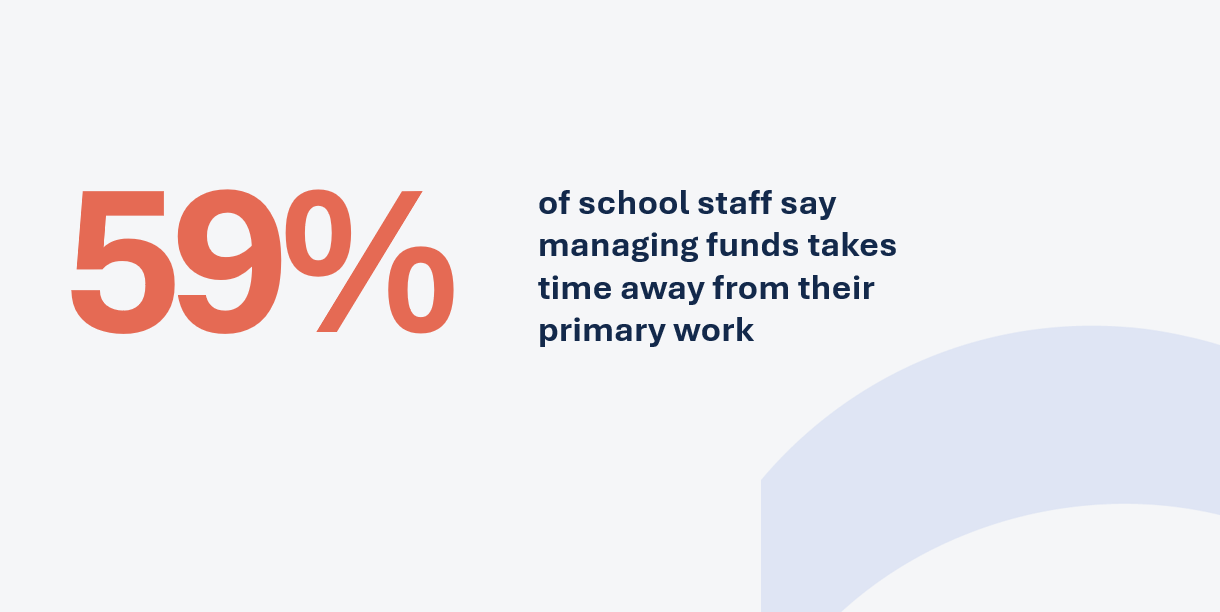
In our survey of hundreds of bookkeepers and teachers, 59% said managing funds takes time away from their primary work. That means teaching students and keeping the back office running smoothly.
A useful exercise: ask one bookkeeper to track how many hours in a typical week go to counting, depositing, and reconciling. Then multiply by the number of schools in your district. Most finance leaders are surprised by the result.
Risk: every hand-off is a gap
Cash is the one form of payment that leaves no trail on its own. A trail only exists if someone creates it: a receipt, a signature, a logged count. Every time cash moves from one person to another, the record depends on that step being done right.
Most of the time, it is. School staff are careful, and they take the responsibility seriously. But the process asks a lot of them.
When fraud does happen in schools, it rarely looks dramatic. In KEV’s review of 93 school and district fraud cases, 97% involved trusted internal staff. It usually starts small and continues because nothing in the process catches it. That’s a system problem, not a people problem. Paper-based cash management puts the job of catching errors on the same people handling the money. In auditing, this is called segregation of duties: the person who handles the cash shouldn’t be the one who records or reconciles it.
Delay: money you can’t account for yet
The third cost is the hardest to measure, and it’s the one district finance leaders feel most.
Go back to the gate receipts. For most of that week, the money existed, but it wasn’t in any system the district could check. Multiply that across every fundraiser, fee, and event in the district, and at any given moment a real share of school-level money is somewhere between collected and recorded.
That makes cash flow management for schools harder than it needs to be. When a board member asks how much the high school’s athletic account holds today, the honest answer can only be accurate as of last month’s report. When an auditor asks about a deposit from October, someone has to find the receipt book, the deposit slip, and the person who made it.
It also shapes how confident leaders feel. In KEV’s research, nearly every CFO said they have a unified view of payments. But when you ask them if they have a unified view of payments in real time, the number drops 67 points to just 29%.
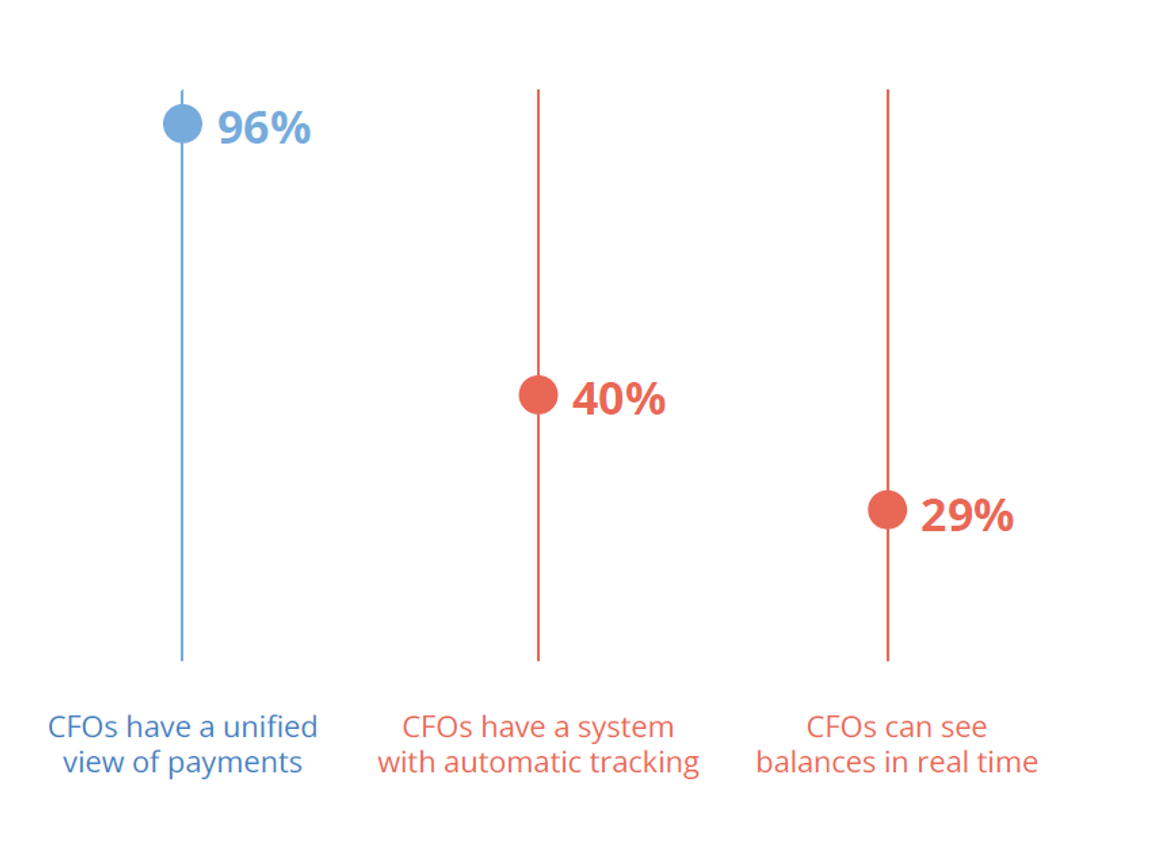
Fewer than a third of CFOs have a real time view of money in their district
What a better system changes
Cash management services for schools often connect to what banks offer: deposit pickup, remote check deposit, account structure. Those help once money reaches the bank. But a lot of the work happens before that, between the moment cash is collected and the moment it’s recorded.
A cash flow management system for schools can dramatically change that part of the journey.
Less cash to handle. When families can pay online for fees, events, and fundraisers, fewer dollars arrive in envelopes in the first place. Every online payment is a dollar nobody has to count, carry, or deposit.
A record at the moment of collection. When the cash that does come in is logged where it’s collected, the trail starts right away instead of days later. The coach logs the gate count Friday night, and the district has a record Friday night, too.
One process across every school. When every school records money the same way, the finance office stops translating twelve formats into one report. Reconciliation becomes a check instead of a reconstruction.
Here’s how the same week of school-level money looks under each approach:
|
Paper-based process |
Unified system |
|
|
How money arrives |
Cash and checks in envelopes, cash boxes, and receipt books |
Mostly online payments, with cash logged as it’s collected |
|
Hand-offs before deposit |
Several, often over days |
Few, recorded at each step |
|
When it’s recorded |
After the deposit, entered by hand |
At the moment of payment or collection |
|
Format across schools |
Each school has its own spreadsheets, binders, or reports |
Every school records money the same way |
|
Reconciliation |
Matching slips, receipt books, and bank statements by hand |
Checking records that already match |
|
“What’s in the athletic account today?” |
“As of last month’s report” |
Today’s balance |
|
An auditor’s question about an October deposit |
A search through files and a phone call or two |
A lookup |
This is the gap KEV built SchoolCash to close. But the principle holds whatever system you use: the fewer hand-offs between collection and record, the lower the cost in hours, risk, and delay.
Where to start
You don’t need a full audit to get a sense of what cash management is costing your district. Start with three questions for your schools:
- How many days, on average, pass between when cash is collected and when it’s recorded?
- Who handles cash between collection and deposit, and how many hand-offs does that involve?
- If you asked for today’s balance in a single activity account, how long would it take to get an answer you trust?
The answers will tell you more than any vendor pitch. And if they take longer to gather than you’d like, that’s the cost showing up.
Frequently asked questions
What is cash management for schools?
Cash management for schools covers everything that happens to money from the moment it’s collected to the moment it’s reconciled: counting, recording, handing off, depositing, and matching records to bank statements. At the school level, that includes fees, fundraisers, event tickets, and activity fund money.
What are best practices for cash handling in schools?
Common practices include counting cash with two people present, issuing pre-numbered receipts, depositing promptly instead of storing cash on site, and separating who collects money from who records and reconciles it. The goal is a clear record at every step, so no single person carries the full responsibility for catching errors.
How much does cash management cost a school district?
Most districts don’t know, because the cost is spread across many people and never tracked as its own line. A practical starting point is asking a few bookkeepers how many hours a week go to counting, depositing, and reconciling, then scaling that across your schools.
What’s the difference between cash management and cash flow management for schools?
Cash management is the handling of the money itself: collecting it, securing it, and getting it deposited and recorded. Cash flow management is knowing how much money is coming in and going out, and when. At the school level, the two are closely linked: when cash takes days to be recorded, it’s harder to know what any account actually holds.
What should a cash flow management system for schools include?
Look for online payment options for families, a way to record cash and checks at the point of collection, one consistent process across every school, and reporting the district finance office can pull without waiting for month-end. Audit trails and role-based permissions matter too.
Do banking cash management services replace a school-level system?
No. Bank services like deposit pickup and remote check deposit help once money reaches the bank. Much of the handling happens earlier, between collection and deposit, which is where a school-level system does its work.
Get the latest K-12 finance best practices delivered to your inbox.
Recommended For You